
Choosing a Pool Cleaner: Robotic or Suction?
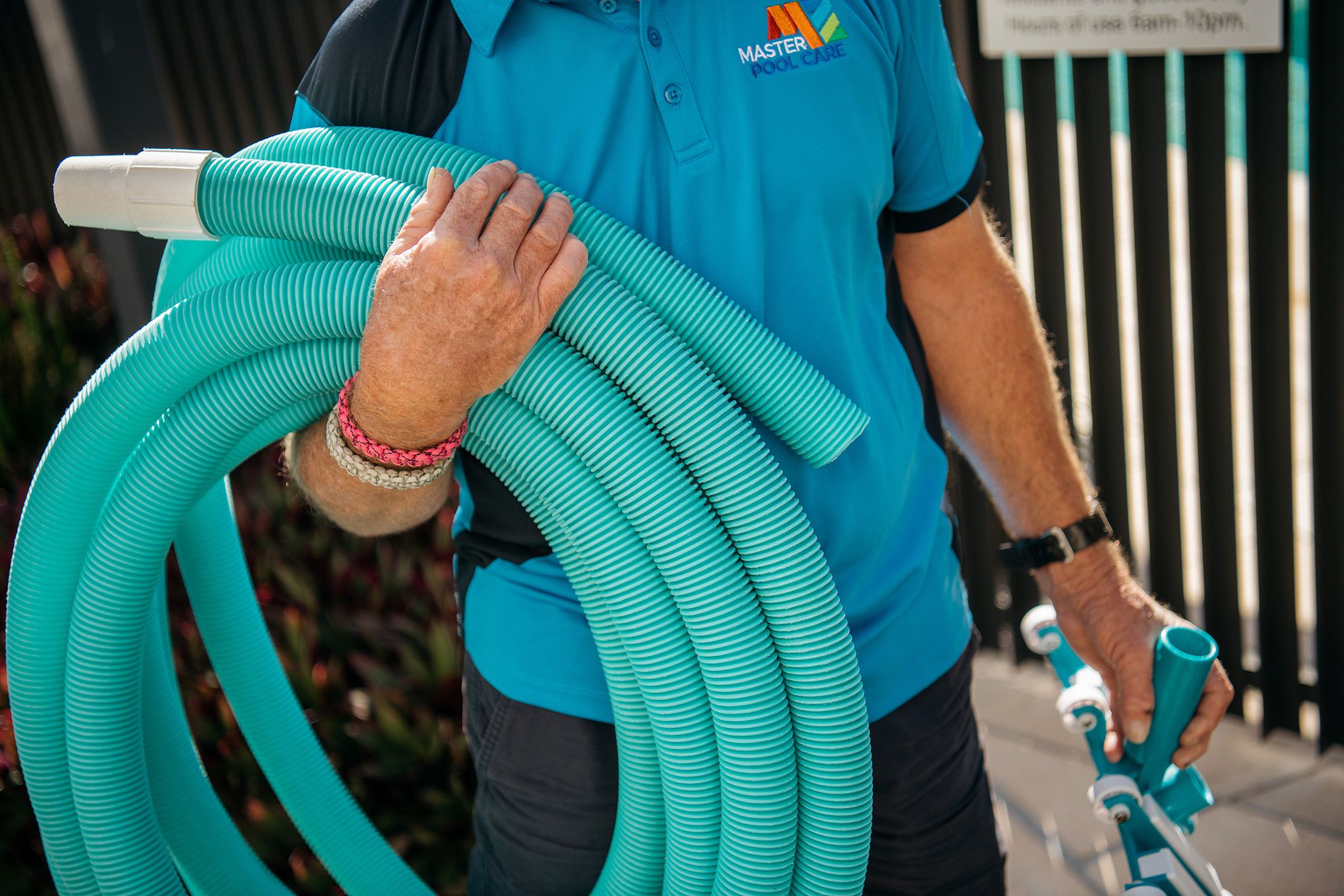
An automatic cleaner takes a lot of the grind out of looking after a pool. It picks up the leaves, dirt and grit that settle on the floor between brushes and vacuums, and it keeps the water circulating where the pump alone doesn't reach. Most of the cleaners we see around Brisbane fall into two camps: suction cleaners and robotic cleaners. Both do the job. The right one depends on your pool, your filter and how much fiddling you're happy to do.
How a suction cleaner works
A suction cleaner plugs into the skimmer box (or a dedicated vacuum point) with a length of hose. The pump pulls water through the cleaner, which wanders around the floor and walls on its own and sends the debris back through the pump basket to the filter.
- Simple, with few moving parts and nothing electrical in the pool.
- Runs whenever the pump runs, so there's nothing to plug in or lift out.
- Everything it picks up ends up in your pump basket and filter, so both need emptying and cleaning more often.
- It relies on good suction. A full basket, a dirty filter or an air leak and it slows down or stops.
- Hoses wear and the diaphragm or wear parts need replacing from time to time.
How a robotic cleaner works
A robotic cleaner has its own motor and filter. It plugs into a power supply beside the pool with a floating cable, scrubs the floor and usually the walls and waterline, and traps debris in its own canister or bag. When it's done you lift it out and rinse the filter.
- It doesn't load up your pump basket or filter, so the filter stays cleaner for longer.
- Most models brush as they go, which helps with fine dirt and early algae.
- It runs on a timer, independent of the pump.
- It has to be lifted out and its filter rinsed after each run, or it can't pick up.
- It costs more up front, and the motor and electronics need some care.
Which suits your pool?
A few things usually decide it:
- Leaves. Pools under big trees fill a suction cleaner's path quickly and can clog it. A robotic cleaner with a large canister copes better, but you'll still be emptying it often in a leafy yard.
- Fine dirt and sand. A robotic cleaner's fine filter catches what a suction cleaner pushes back to a sand or cartridge filter.
- Your filter. If your cartridge filter already clogs quickly, a suction cleaner adds to its load. See how to clean filter cartridges.
- Shape and surface. Steps, ledges and tight corners suit some models better than others. Check the cleaner is rated for your surface: concrete, fibreglass or vinyl.
- Your time. A suction cleaner is set-and-forget once it's running well. A robot needs lifting out and rinsing, but it rewards that with a cleaner floor and filter.
Getting the most out of either one
Whichever cleaner you choose, a few habits keep it working:
- Empty the skimmer and pump baskets regularly. A full basket starves a suction cleaner of flow. Our guide on why you need to empty your skimmer basket explains why.
- Keep the water level halfway up the skimmer opening so the skimmer doesn't suck air.
- Check hoses and cables for kinks, splits and tangles.
- Take the cleaner out when you shock dose or add chemicals that need a few hours to disperse, and when the pool is being used.
- Don't leave a robotic cleaner sitting in the sun on the pool edge; heat and UV wear out the plastics and cable.
Before you buy
The cheapest cleaner isn't always the best value if it struggles with your pool. Think about how much debris you get, what filter you've got and how much time you want to spend on it, then compare a couple of models that suit that. If you already have a cleaner that isn't moving properly, it's often a worn part, a hose or a suction problem rather than a dead cleaner. Our technicians check the pump, filter and pool cleaner as part of a service.
Not sure which way to go? Come into our shop at 304-306 Junction Rd, Clayfield and talk it through with our team, or call (07) 3857 8530. You can also book a service and have a technician look at your pool and equipment, or see everything we do on our services page.