
Is Your Pool Losing Water to Evaporation or a Leak?
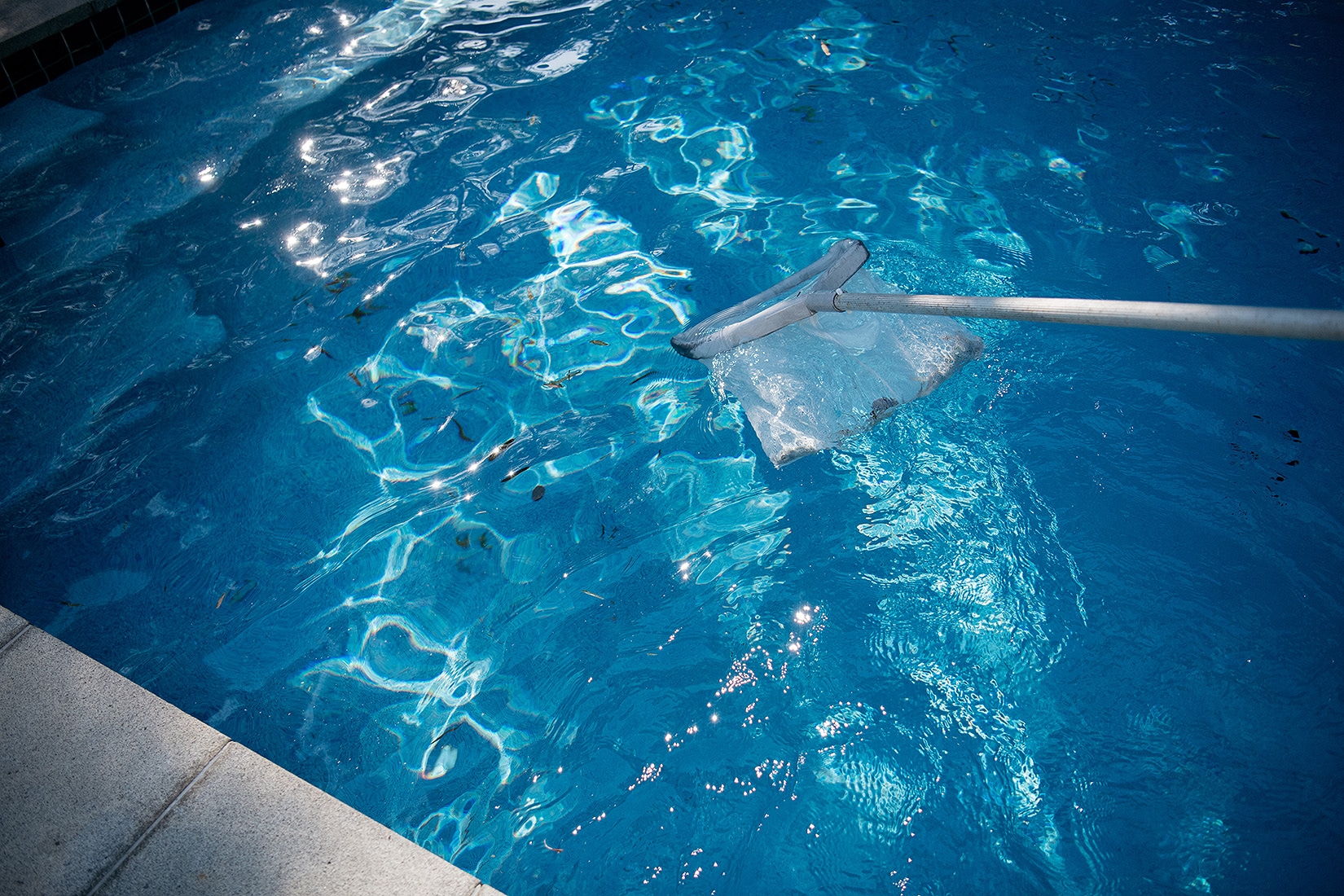
Every pool loses water. Over a Brisbane summer, with hot days, dry westerly winds and the kids in and out of the water, the level can drop surprisingly fast. So when the hose seems to be on the pool every few days, it's hard to know whether that's just the weather or whether the pool is leaking. Before you start worrying about cracks, there's a simple test that will tell you which one it is.
Why the level matters
The water should sit about three-quarters of the way up the skimmer box opening. If it drops much lower, the skimmer starts sucking air. The pump can run dry and overheat, the salt chlorinator may switch itself off because there isn't enough flow across the cell, and you can end up with an airlock in the system. Our article on why you must check your water levels covers this in more detail. Whatever the cause of the water loss, keep the level topped up while you work it out.
What counts as normal evaporation
Evaporation depends on the weather far more than the pool. Hot, dry and windy days take the most water. A pool in full sun loses more than a shaded one, and a heated pool or a spa loses more again. Splashing, water features and spa jets all add to it, and so does backwashing a sand or glass filter, which sends water to waste every time.
Rain works the other way and can hide a problem for weeks. If you've just had a run of storms, wait for a dry spell before deciding whether the pool is holding its water.
The bucket test
This is the easiest way to compare your pool with plain evaporation. The bucket sits in the same sun and wind as the pool, so it loses water at roughly the same rate.
- Step 1. Top the pool up to its normal level.
- Step 2. Fill a bucket with pool water to about 10 cm from the top and stand it on the top step, so most of the bucket is in the pool water. Weigh it down with a brick if it floats.
- Step 3. Mark the water level inside the bucket and the pool level on the outside of the bucket.
- Step 4. Run the pump on its normal timer and don't swim or backwash.
- Step 5. After 24 hours, compare the two marks.
If both have dropped by about the same amount, you're looking at evaporation. If the pool has dropped noticeably more than the bucket, water is going somewhere else.
For a second clue, repeat the test with the pump turned off for the 24 hours. If the pool loses more with the pump running, the leak is most likely in the pressure side of the plumbing or at the equipment. If it loses the same either way, look at the pool shell, the fittings in the walls, or the suction lines.
Where pools usually leak
Most leaks we find are in a handful of places:
- The equipment pad. Drips from the pump, filter, chlorinator or valves. Look for wet ground, rust stains or a small puddle under the pump.
- The backwash or waste line. A multiport valve that isn't sealing can let water run out to waste all the time the pump is on.
- The skimmer box. Cracks where the skimmer meets the pool shell are common, especially on older pools.
- Wall fittings and lights. Return jets, cleaner points and pool lights all pass through the shell. See the components of pool lights.
- Underground pipework. Tree roots and ground movement can crack pipes you can't see. Soggy patches in the lawn between the pool and the equipment are a giveaway.
If the level always stops dropping at the same point, that's a clue too. It often means the leak is at that height, like the skimmer mouth or a light.
What not to do
- Don't empty the pool to look for a leak. A pool shell can lift or crack when the water comes out. Read why emptying your pool could cost you big.
- Don't ignore it. Constant topping up dilutes the salt and throws out the water balance, and water escaping underground can wash out the soil around the pool.
- Don't let the level drop below the skimmer while you wait. That's how pumps get damaged.
If the bucket test points to a leak, our technicians can track it down and tell you what it will take to fix. Find out more about our pool leak detection, book a service, call (07) 3857 8530, or bring your questions into our shop at 304-306 Junction Rd, Clayfield.